Co-Director Insurance vs. Corporate Co-Director Insurance in Ireland
Understanding Co-Director Insurance vs. Corporate Co-Director Insurance. In Ireland, businesses and their leaders face numerous risks that can impact their financial stability and operational continuity. Among the essential strategies for managing these risks are Co-Director Insurance and Corporate Co-Director Insurance. While both serve to mitigate risks associated with the sudden incapacity or death of key individuals in a company, they differ in scope, purpose, and application. We will explore these differences, outline the advantages and disadvantages of each, and provide case study scenarios illustrating their importance.
Co-Director Insurance
Co-Director Insurance is a policy that protects individual directors in a company. This type of insurance provides a financial safety net by compensating the business in the event of the death or critical illness of a co-director. The main goal is to cover the company’s operational stability that may result from losing a director.
Advantages:

- Operational Protection: Provides a lump sum to co-directors in order to purchase another co-director’s shares in case of his/her serious illness or premature death.
- Loan Security: Sometimes can be accepted as collateral to secure business loans, reducing lender risk.
- Business Continuity: Ensures that the company can continue operations without immediate financial distress.
Disadvantages:
- Cost: Premiums can be high, especially for older directors or those with health issues.
- Limited Scope: Does not cover the broader business liabilities, only specific individuals.
- Complex Underwriting: Requires detailed health and lifestyle information from the insured directors. Also financial evaluation of the company.
Corporate Co-Director Insurance
Corporate Co-Director Insurance, also sometimes called as Shareholder Protection Insurance, is designed to protect the company itself rather than individual directors. This insurance ensures that if a director or key shareholder dies or becomes critically ill, the company can buy back their shares or manage the transition without financial strain. This helps prevent the disruption that might occur if the deceased director’s family decides to sell their shares to an outside party.
Advantages:
- Share Purchase: Provides funds to buy back shares from the estate of a deceased director, maintaining control within the company.
- Stability: Helps maintain business stability by ensuring the remaining directors retain control.
- Peace of Mind: Directors can plan succession knowing the company will have funds available to manage share transfers.
Disadvantages:
- Complex Arrangements: Requires detailed agreements and valuations of shares.
- Legal and Tax Implications: May involve complex legal structures and tax considerations.
How is your Business Structured?
To determine the type of Business Insurance you need depends on the structure of your business and its key risks. This will then allow you to tailor a business protection solution to suit your needs.
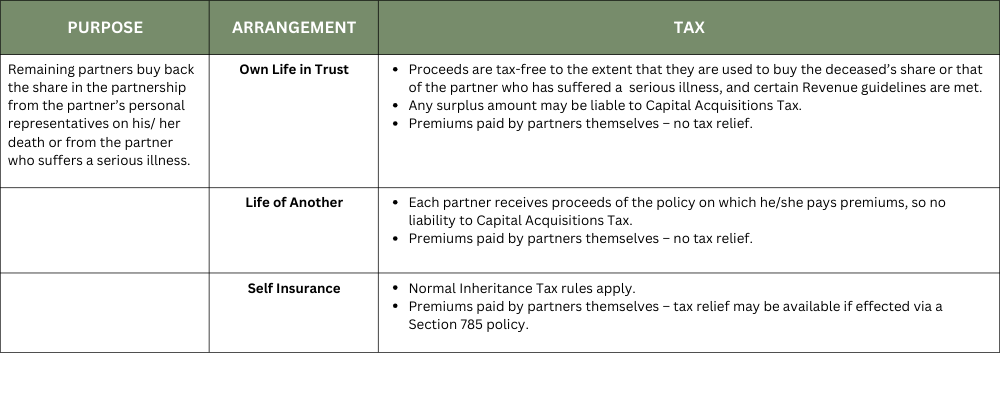
Partnership Insurance
Partnership Insurance is designed for a partnership to protect against the risk of death or serious illness of a partner by providing a lump sum to assist the remaining partners to purchase his/her share of the business.
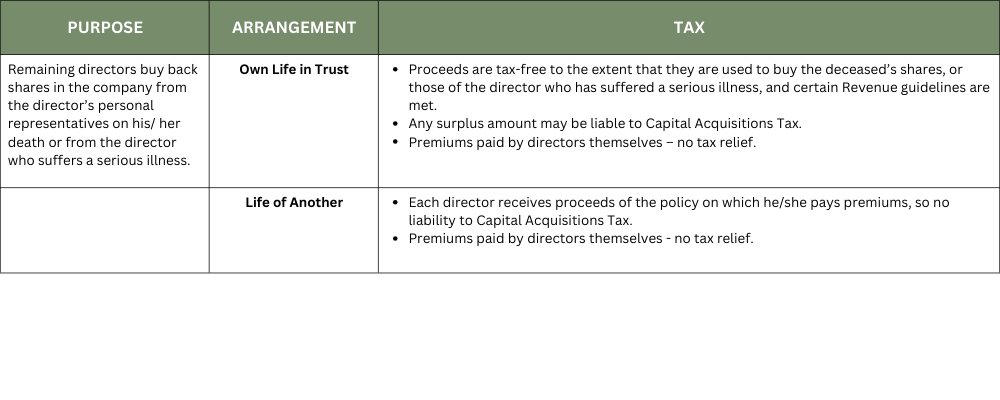
Co-Director Insurance
Co-Director Insurance is designed for company directors to protect against the risk of death or serious illness of a co-director/shareholder by providing a lump sum to assist the remaining directors to purchase his/her share of the business.
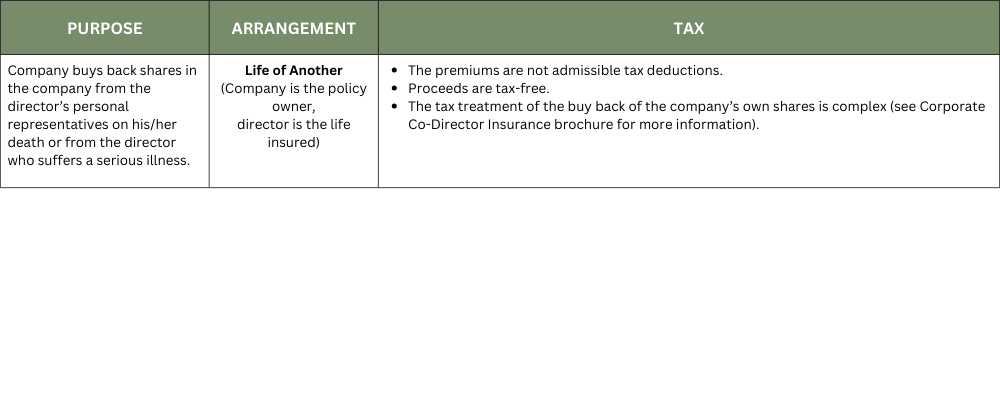
Corporate Co-Director Insurance
Corporate Co-Director Insurance is designed for a company to protect against the risk of death or serious illness of a co-director/shareholder by providing a lump sum to assist the company to purchase his/her share of the business.
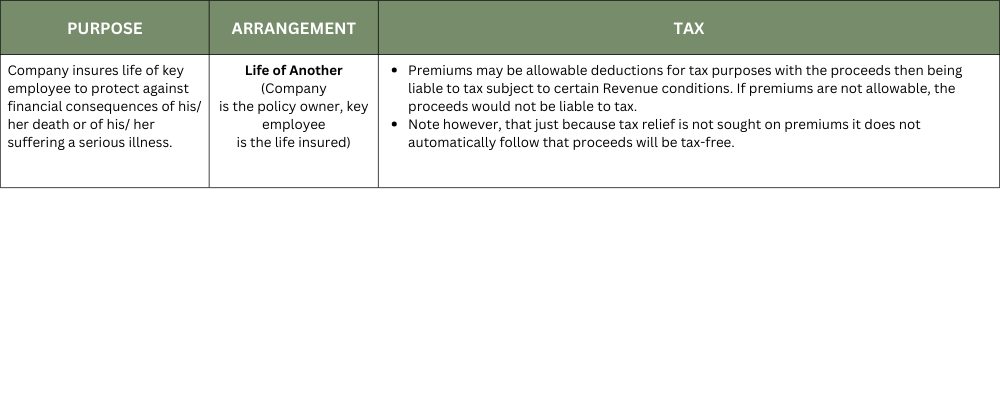
Key Person Insurance
Key Person Insurance is designed for a business that needs to protect against the financial impact of losing a key employee of the business.

Case Study Scenarios
Scenario 1: Key Employee Death
Imagine a medium-sized technology firm in Dublin with three directors. One director is the Chief Technology Officer (CTO), who holds critical knowledge of the company’s proprietary software. If the CTO were to pass away unexpectedly:
- Without Insurance: The company could face significant financial strain trying to replace the CTO, potentially leading to loss of clients and revenue, or even business closure.
- With Keyman Insurance: The policy would provide funds to cover recruitment costs, financial losses and bank loans, ensuring the company can maintain operations and client trust.
Scenario 2: Buying Back Shares
In a family-owned retail business, two directors own 50% of the shares each. If one director dies, the shares might go to the family, who may wish to sell them:
- Without Insurance: The remaining director might struggle to buy the shares, risking losing control if an outside party buys them.
- With Co-Director or Corporate Co-Director Insurance: The insurance would provide funds to purchase the shares, maintaining business control and continuity.
Impact of a Key Employee’s Illness or Death (Keyman Insurance)
The sudden loss of a key employee can significantly affect a company’s viability. The direct impact includes:
- Operational Disruption: Loss of critical skills and expertise.
- Financial Losses: Costs associated with recruitment, training, and potential lost sales resulting with a sudden deterioration of company’s profit, hence not meeting company’s loan repayments.
- Market Confidence: Stakeholders may lose confidence, affecting business value and partnerships.
Insurance Role:
- Financial Buffer: Provides a financial cushion to manage immediate losses.
- Recruitment Costs: Covers expenses associated with finding and training a replacement.
- Loan Security: Ensures that business loans remain secure.
- Share Acquisition: Ensures that shares are retained within the company.
Conclusion
Businesses must carefully evaluate their specific needs and circumstances to choose the appropriate insurance solution that best protects their interests and ensures long-term success.
E.&O.E.
Speak with a Financial Advisor:
Fill out your details and inquiry below, and one of our Qualified Financial Advisors will get back to you shortly.